
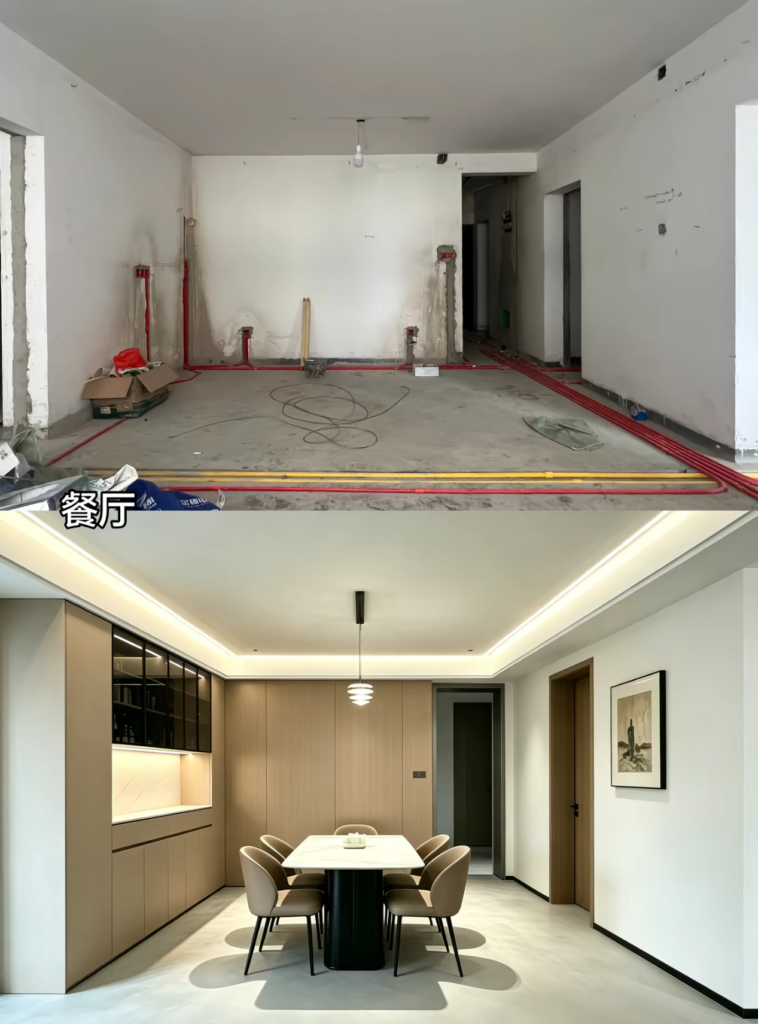
Whole-house customization has transformed from a niche luxury option into the mainstream standard of modern interior living, reshaping how people design, use and connect with their homes worldwide.
Driven by urbanization and evolving personal living demands, traditional off-the-shelf furniture can no longer fit irregular room layouts, diverse storage needs and unique aesthetic preferences. Custom built-in cabinetry, spanning living rooms, bedrooms, studies and commercial spaces, solves this pain point by tailoring every dimension, function and detail to match individual lifestyles. Rather than simply furnishing a house, the industry now focuses on creating a complete, cohesive living narrative that belongs exclusively to each homeowner.
Several core trends are steering the development of the sector in 2026.
First, unified seamless aesthetics have become the mainstream. Homeowners pursue consistent textures, color palettes and design language across every zone, with floor-to-ceiling hidden cabinets, integrated wall panels and handle-free styles dominating modern interior projects, eliminating messy visual fragmentation.
Second, sustainability stands as a non-negotiable baseline. Global consumers prioritize low-formaldehyde, eco-friendly boards, recyclable raw materials and low-VOC finishing techniques, pushing the whole industry to upgrade production standards toward greener, healthier living spaces.
Third, smart modular design rises rapidly. Adjustable storage modules, motorized wardrobe hardware, built-in charging systems and hidden smart lighting are seamlessly embedded into custom furniture, balancing minimalist appearances with convenient, tech-driven daily functionality.
Fourth, flexible multi-scene layout gains popularity. With hybrid work and multi-generational living becoming common, custom solutions blur the line between study, guest room and leisure area, creating convertible spaces that adapt to shifting life stages.